Colin Craven
Colin Craven is the hidden, invalid son of Archibald Craven, whose ten-year confinement to his room and belief that he is dying of a hunchback are overturned when his cousin Mary Lennox and the moor boy Dickon Sowerby draw him into the secret garden, where he discovers he is not crippled and declares he will live forever.
Identity and Background
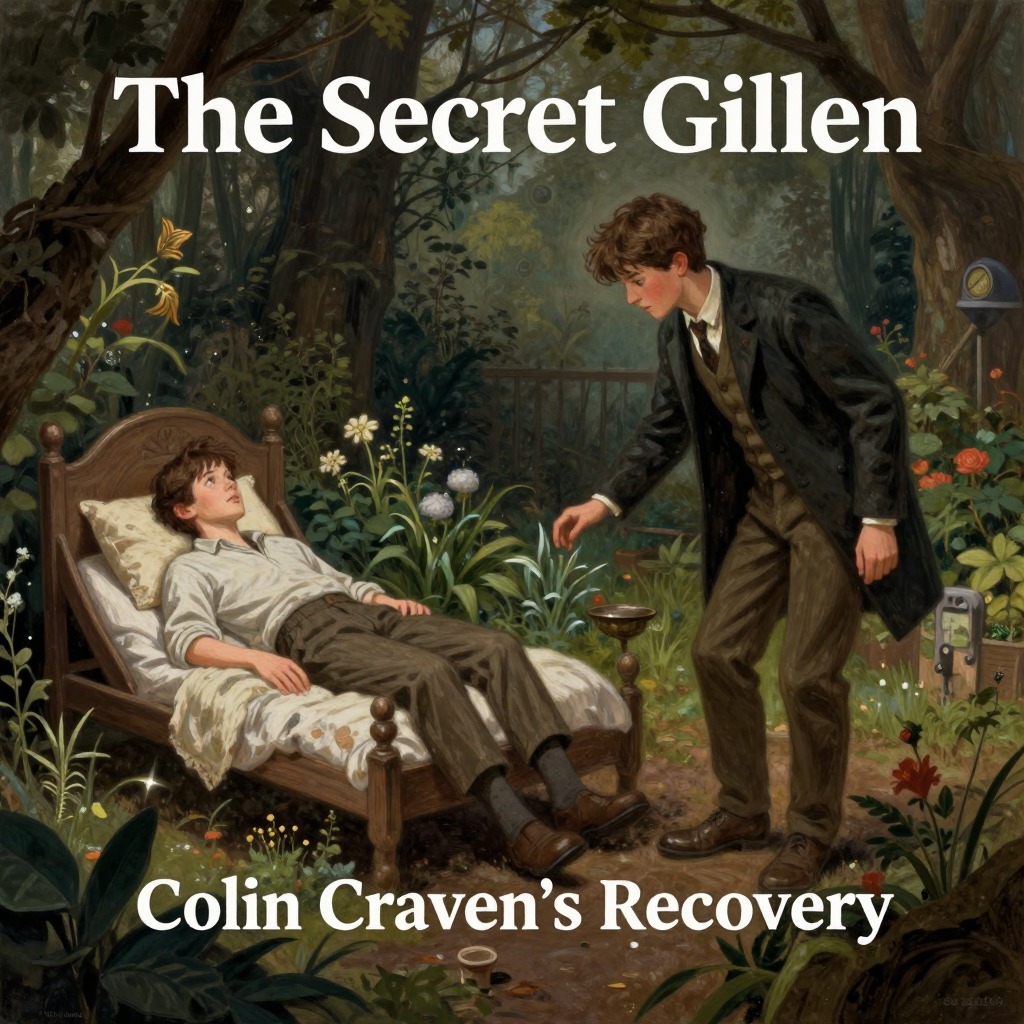
Colin Craven is the son of Archibald Craven and Lilias Craven, born on the same day his mother died from a fall in the garden. His father, overwhelmed by grief, could not bear to look at him, and the household was ordered never to speak of the boy. Colin was raised in almost total isolation in a large, richly furnished room at Misselthwaite Manor, attended by nurses and servants who were forbidden to mention his existence. He was told he was a hunchback and that he would die young, and he came to believe this so thoroughly that he refused to sit up, walk, or go outdoors, spending his days lying on a sofa reading picture-books and brooding on his own death. When Mary Lennox first sees him, he is lying in a carved four-posted bed, crying fretfully, with a sharp, ivory-white face and enormous gray eyes rimmed with black lashes. He tells her, "If I live I may be a hunchback, but I shan't live." He has been given everything he asks for and has never been contradicted, which has made him tyrannical and prone to violent tantrums.
Arc Through the Plot
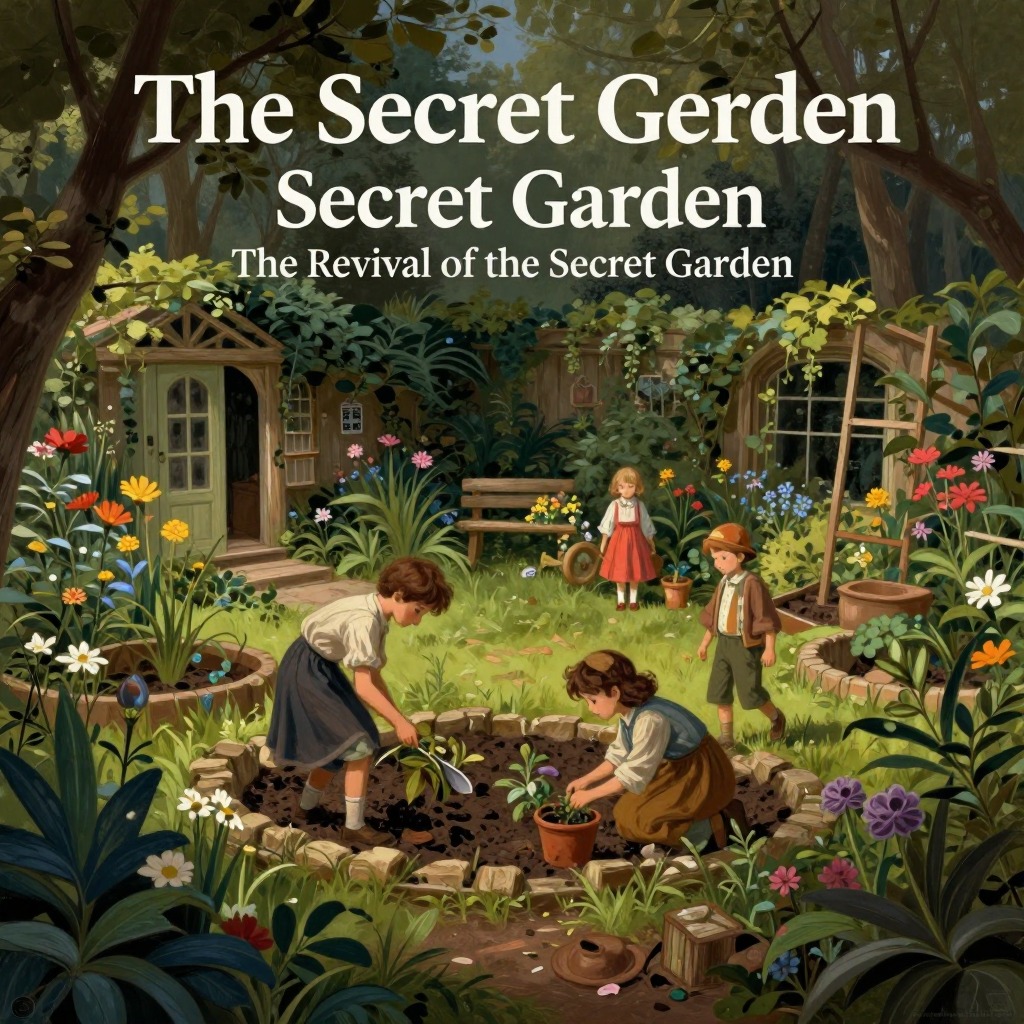
Colin's transformation begins the night Mary discovers him. She hears him crying, follows the sound through the dark corridors, and finds him awake in his room. They talk for hours, and for the first time he meets someone who does not treat him as an invalid. Mary tells him about the secret garden, and he becomes fascinated by the idea of a hidden place no one else knows about. He makes her promise to keep it a secret and to come and talk to him every day. Over the following weeks, Mary and Dickon bring the garden to life, and Colin's health improves dramatically. He begins to eat, to laugh, and to sit up. When Mary tells him about the garden, he insists on being taken there. On his first visit, he is wheeled in his chair through the ivy-covered door, and the sight of the spring garden—the green veil of leaves, the crocuses, the birds—fills him with such joy that he cries out, "I shall get well! I shall get well! Mary! Dickon! I shall get well! And I shall live forever and ever and ever!"
Key Actions and Objectives
Colin's central objective is to overcome his own fear of death and deformity. He does this by embracing what he calls "Magic"—a belief that positive thinking and the life force of the garden can heal him. He conducts a "scientific experiment" in which he and the others chant affirmations: "Magic is in me! Magic is making me well!" He also begins to exercise, learning muscle-building routines from Dickon, who has learned them from a champion wrestler. The most dramatic action comes when Ben Weatherstaff, the old gardener, peers over the wall and calls Colin a "poor cripple." In a fury of insulted pride, Colin tears off his blankets, stands up on his own feet for the first time, and shouts, "Look at me! Just look at me—you! Just look at me!" He walks to a tree, digs the earth with a trowel, and plants a rose, declaring, "This is only th' first day an' I've walked—an' here I am diggin'."
Relationships and Conflict
Colin's relationship with Mary is the catalyst for his change. She is the first person who refuses to pity him or give in to his tantrums. When he screams that he feels a lump on his back, she examines his spine and tells him flatly, "There's not a single lump there!" Her bluntness shocks him into a new self-awareness. With Dickon, Colin finds a friend who treats him as an equal. Dickon brings his tame animals—the fox Captain, the rook Soot, the squirrels Nut and Shell, and a newborn lamb—and Colin is enchanted. He says, "I wish I was friends with things, but I'm not." Dickon's natural, unselfconscious kindness helps Colin feel safe. The central conflict is with his father, Archibald Craven, who has avoided him for ten years. Colin plans to keep his recovery a secret until his father returns, then walk into his study and say, "Here I am; I am like any other boy." The reunion happens unexpectedly when Colin bursts through the garden door and nearly runs into his father's arms. He declares, "Father, I'm Colin. You can't believe it. I scarcely can myself."
Change and Ending
By the end of the novel, Colin is a completely different boy. He has gained weight, his skin has lost its waxy pallor, and he can walk, run, and dig in the garden. He no longer fears death or deformity. He tells his father, "I'm well, I can beat Mary in a race. I'm going to be an athlete." He walks back to the house on his own feet, with his head up and his eyes full of laughter. The servants see him crossing the lawn and are astonished. Colin's transformation is the novel's central triumph: a boy who was believed to be dying becomes a healthy, vigorous child, and the secret garden is the agent of his rebirth.
Narrative Role and Evaluation
Colin Craven is the novel's second protagonist and the embodiment of its central theme: that life, health, and joy can be restored through contact with nature, friendship, and the power of positive belief. His arc mirrors Mary's, but his is more dramatic because his physical and psychological imprisonment has been more complete. He begins as a figure of pathos and tyranny—a "young Rajah" who commands everyone but is himself a prisoner of fear—and ends as a symbol of resurrection. His declaration "I shall live forever—and ever—and ever!" is the novel's most famous line and its emotional climax. Colin's story is a classic example of the "round character" in E. M. Forster's terms: he is capable of surprising the reader convincingly, and his transformation is earned through a series of small, believable steps rather than a single magical event.